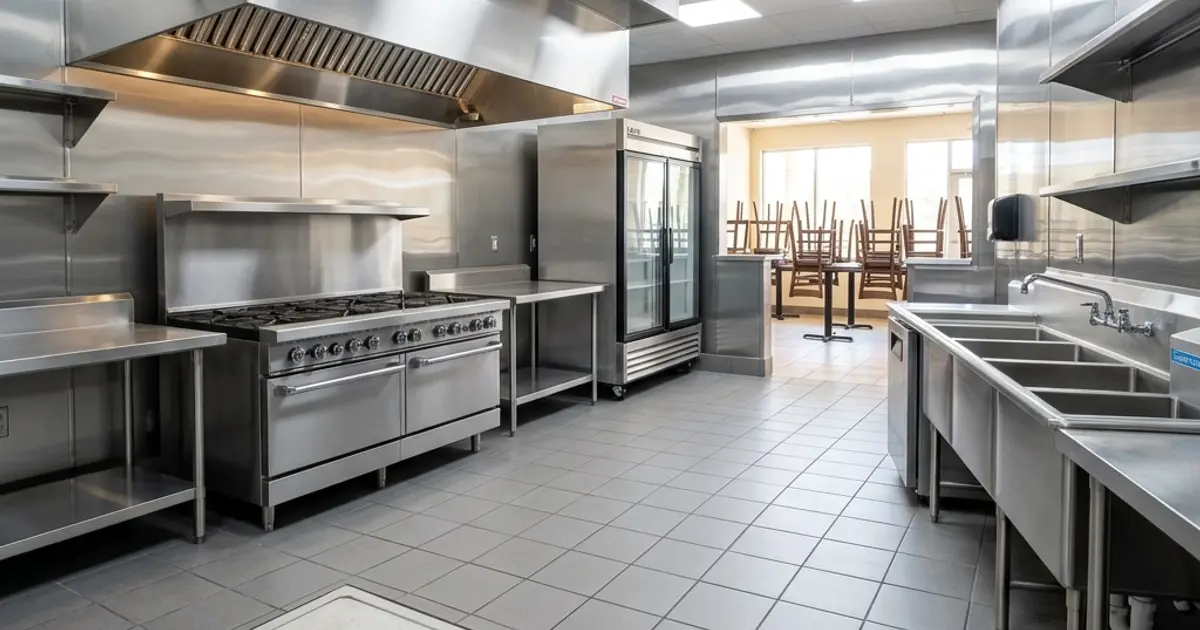
Starting a Restaurant in Florida: Grease Trap Compliance Checklist
If you're opening a restaurant in Florida, grease trap compliance isn't something you figure out after you open — it's a pre-opening requirement that affects your building plans, permits, and budget. Every commercial food service establishment in Florida must have a properly sized and permitted grease removal system before serving the first customer.
This checklist walks you through every grease-related compliance step, from initial planning to your first pump-out.
Pre-Opening Grease Trap Requirements
Before you pour the first cup of coffee, you need:
- A grease trap or interceptor — sized for your specific kitchen fixtures and menu type
- A building permit — for the installation, approved by your local building department
- A plumbing inspection — confirming proper installation before you open
- A maintenance contract — with a DEP-licensed hauler
- Registration with your county's FOG program — if your county has one
- A documentation system — for manifests and maintenance records
These requirements exist at both the state level (Chapter 62-705, Florida Building Code) and the county level (local FOG ordinances). Your county's requirements may be stricter than the state minimum.
Step-by-Step Compliance Checklist
Phase 1: Planning (8-12 Weeks Before Opening)
Determine your grease removal requirements Contact your county's building department and environmental services department. Ask:
- What type of grease removal equipment is required for your establishment type?
- Are there county-specific FOG ordinance requirements beyond state code?
- What permits are needed for installation?
- Is pre-approval of your grease management plan required?
Get a professional sizing assessment Hire a licensed plumber or mechanical engineer to evaluate your kitchen plans and determine the correct trap or interceptor size. They'll consider:
- Number and type of connected fixtures
- Calculated flow rate (GPM)
- Menu type and FOG load factor
- Building constraints (new construction vs renovation)
See our grease trap sizing guide for detailed sizing information.
Decide: interior trap vs underground interceptor Based on your sizing assessment and county requirements:
- Interior traps (20-100 GPM) — for low-volume operations in existing buildings
- Underground interceptors (500-2,000+ gallons) — for new construction and high-volume restaurants
Review our grease trap vs interceptor comparison to understand the differences.
Budget for installation
- Interior grease trap: $500-$2,000 installed
- Underground interceptor: $5,000-$25,000 installed
- Include this in your construction or renovation budget — it's not optional
Phase 2: Permitting and Installation (4-8 Weeks Before Opening)
Submit permit application Your plumber or contractor typically handles this. Required documents usually include:
- Kitchen plumbing plans showing trap/interceptor location and connections
- Equipment specifications (manufacturer, model, capacity, flow rate)
- Site plan showing interceptor location (if underground)
- Proof of compliance with PDI or ASME standards
Schedule installation Coordinate with your general contractor and plumber. For underground interceptors, excavation must happen during site work — retrofitting after the parking lot is poured is extremely expensive.
Pass plumbing inspection Your local building inspector must approve the installation before your certificate of occupancy is issued. Common inspection items:
- Correct trap/interceptor size for calculated flow rate
- Proper connections to all required fixtures
- Accessible cleanout and inspection ports
- Proper venting
- Sampling point (required by some counties)
Phase 3: Service Setup (2-4 Weeks Before Opening)
Choose a DEP-licensed grease hauler This is critical. Under Chapter 62-705, your hauler must be licensed by the Florida DEP. When evaluating haulers:
- Request their DEP license number and verify it
- Ask about their disposal facility (must be DEP-permitted)
- Confirm they provide grease waste service manifests
- Get a written service agreement with defined frequency and pricing
- Ask about emergency/overflow response capability
Browse grease trap service companies in your area.
Set your maintenance frequency Your county's FOG ordinance specifies the minimum pump-out frequency. Common requirements:
- Miami-Dade: Every 30 days for restaurants
- Pinellas: Every 90 days minimum, or when 25% capacity is reached
- Hillsborough: Every 90 days minimum
- Orange: Per FOG program enrollment, typically 90 days
- Broward: Every 90 days minimum
When in doubt, start with monthly service and adjust based on actual FOG accumulation rates.
Register with your county's FOG program Many Florida counties require food service establishments to register with their FOG control program. This registration may involve:
- Submitting a grease management plan
- Providing hauler information
- Agreeing to inspection schedules
- Paying a registration fee (varies by county)
Phase 4: Documentation Systems (Before Opening)
Create a maintenance log Set up a system to track:
- Service dates and hauler name
- Volume of waste removed
- FOG level at time of service
- Any issues noted (odors, slow drains, equipment damage)
- Self-inspection dates and findings
Set up a manifest filing system Designate a binder or digital folder for grease waste manifests. Remember: 1 year of manifests must be on-site at all times, accessible for inspection.
Create employee training materials Document your kitchen's FOG procedures:
- Scrape all plates and cookware before washing
- Never pour grease, oil, or food waste down any drain
- Use drain screens on all sinks and floor drains
- Report slow drains or odors to management immediately
- Know where the grease trap is and how to check it
See our maintenance tips guide for a comprehensive list of daily practices.
County-Specific Requirements: Top 5 Counties
Miami-Dade County
- FOG program enrollment mandatory for all food service establishments
- Grease management plan required before opening
- Monthly pump-out minimum for most restaurants
- Quarterly inspections by county staff
- Separate used cooking oil collection requirements
Broward County
- FOG Control Program registration required
- 90-day maximum pump-out interval
- Annual inspection by county environmental services
- Written grease management plan must be on-site
- Hauler must be county-registered in addition to DEP-licensed
Hillsborough County
- FOG ordinance requires registration with Environmental Services
- 90-day maximum service interval
- Interceptor sampling may be required (BOD/TSS levels)
- New construction requires underground interceptor
- Graduated penalty structure for violations
Orange County
- Utilities FOG program oversees compliance
- FOG permit required for food service establishments
- Interceptor sizing must be approved before installation
- BMP (Best Management Practices) plan required
- Semi-annual inspections for new establishments
Pinellas County
- County Utilities enforces FOG requirements
- 90-day maximum pump-out interval
- 25% rule strictly enforced
- Approved hauler list maintained by county
- Repeat offenders placed on monthly inspection schedule
Budget Planning: First-Year Grease Compliance Costs
| Item | Low Estimate | High Estimate |
|---|---|---|
| Grease trap/interceptor equipment | $200 | $10,000 |
| Installation (including plumbing) | $500 | $25,000 |
| Permits and inspections | $100 | $500 |
| First year maintenance (4-12 services) | $800 | $6,000 |
| FOG program registration fees | $0 | $200 |
| Employee training materials | $0 | $100 |
| Total first-year cost | $1,600 | $41,800 |
The wide range reflects the difference between a small cafe with an interior trap and a large restaurant with an underground interceptor. Most mid-size Florida restaurants should budget $8,000-$15,000 for first-year grease compliance costs.
Frequently Asked Questions
When should I start thinking about grease traps in my restaurant planning?
During the initial design phase — before finalizing kitchen layouts or submitting building plans. Underground interceptors affect your site plan, and interior trap locations affect plumbing runs. Adding these after plans are approved means costly redesigns and permit amendments. **Can I take over the previous tenant's grease trap?** Possibly, but get it inspected first. Have a licensed plumber verify the trap/interceptor is the correct size for your menu and fixtures, is in good condition, and meets current code. You may also need to transfer or establish new FOG program registration with your county. **What if my landlord says grease trap installation isn't their responsibility?** Review your lease carefully. In Florida, responsibility for grease trap installation and maintenance varies by lease terms. For new installations, it's typically negotiated as part of the tenant improvement (TI) package. For ongoing maintenance, the tenant (restaurant operator) is usually responsible. Get this in writing before signing. **Do I need a grease trap if I only serve beverages and pre-packaged food?** Possibly not, but check with your county. Establishments that don't cook or wash dishes with FOG may be exempt from grease trap requirements. However, any establishment with a commercial dishwasher, mop sink, or food preparation area typically needs at least a small trap. Your county's FOG program administrator can confirm your specific situation.