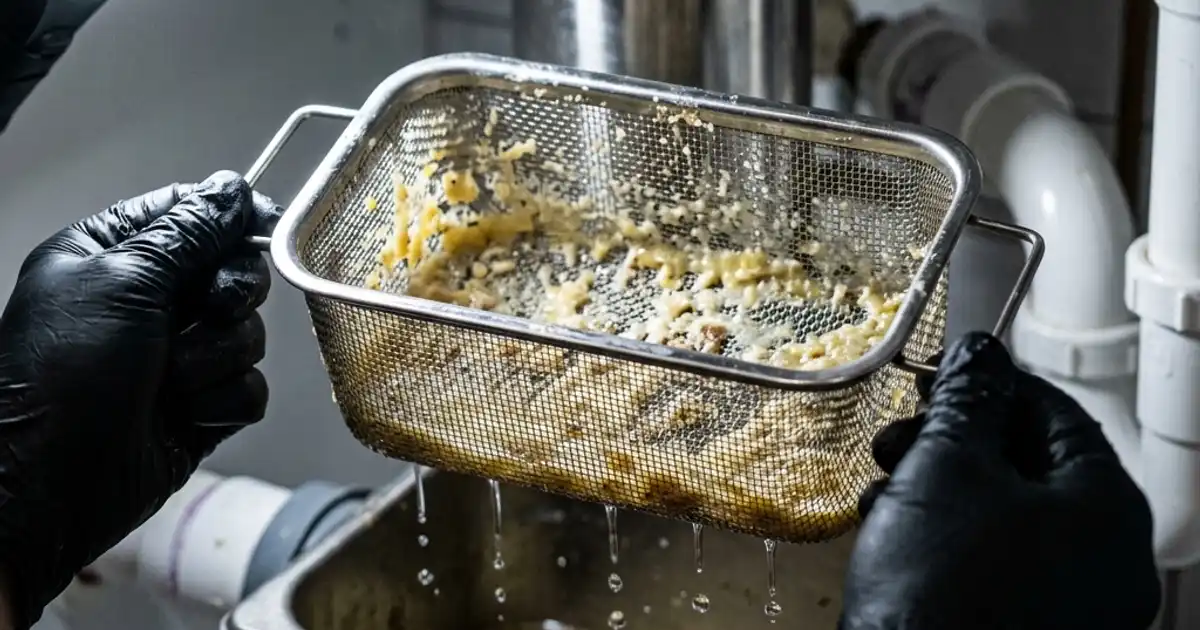
What Professional Grease Trap Cleaning Actually Looks Like
You sign the invoice, the truck pulls away, and you assume everything went well. But did it? Most Florida restaurant owners and kitchen managers have never actually watched a grease trap cleaning from start to finish. They know it happens, they know it costs money, and they know someone shows up with a big truck. Beyond that, the process is a black box.
That is a problem. When you do not know what proper service looks like, you cannot tell the difference between a thorough job and a five-minute pump-and-go that leaves half the grease behind. And in a state where Chapter 62-705 holds both the hauler and the originator responsible for compliance, understanding the process is not optional — it is your protection.
Here is exactly what happens during a professional grease trap cleaning, what equipment a legitimate hauler uses, how long it takes, and what your kitchen should expect during service.
Before the Truck Arrives: Scheduling and Access
A professional service starts before the hauler shows up. When you book a cleaning — either as a one-time call or through a recurring contract — the hauler should confirm several details:
- Trap location and access: Is it interior (under the kitchen floor or sink) or exterior (buried in the parking lot or behind the building)? Access affects equipment needs.
- Trap size: Measured in gallons or grease pounds intercepted (GPI). Common sizes for Florida restaurants range from 20-gallon under-sink traps to 1,500-gallon underground interceptors.
- Preferred service window: Most haulers recommend cleaning during off-peak hours. Early morning before prep starts or late evening after close minimizes kitchen disruption.
- Special considerations: Tight parking lots, restricted building access hours, shared trap systems in strip malls.
A hauler who shows up without knowing any of this is already behind.
Step 1: Arrival and Assessment (5-10 Minutes)
The service truck arrives — typically a vacuum tanker truck equipped with a high-powered suction system, hoses, and hand tools. The crew (usually one or two technicians) starts with a visual assessment:
- Locate and open the trap. For interior traps, this means removing floor grates or access panels. For exterior interceptors, lids may require pry bars or specialized lifters — some concrete lids weigh over 200 pounds.
- Measure the current grease level. A technician uses a dipping stick or measuring rod to check how full the trap is. This reading matters — under Miami-Dade County's DERM program, for example, a trap that exceeds 25% capacity at the time of service indicates the cleaning frequency is too low.
- Note the condition. Cracks, corrosion, missing baffles, damaged inlet/outlet tees — all get documented. A professional hauler inspects, not just pumps.
Step 2: Pumping (10-30 Minutes)
This is the core of the service. The technician inserts a vacuum hose into the trap and begins extracting the contents:
- Floating grease layer (FOG cap): The thick layer of fats, oils, and grease that has risen to the top. This is the primary waste material.
- Wastewater (gray water): The middle layer of relatively clear water between the grease cap and the settled solids.
- Settled solids (sludge): Food particles, debris, and heavy solids that have sunk to the bottom.
All three layers go into the vacuum truck's tank. A proper pump-out removes everything — not just the floating grease on top. A common shortcut among less thorough operators is to skim the FOG cap and leave the sludge layer behind. This causes the trap to fill faster and can lead to blockages in the outlet pipe.
For a standard 1,000-gallon interceptor, pumping takes roughly 15 to 25 minutes depending on the grease consistency and the power of the vacuum system. Smaller under-sink traps can be pumped in under 10 minutes.
Step 3: Scraping and Manual Cleaning (10-20 Minutes)
After the bulk waste is removed, the trap is not clean — it is just empty. A professional service includes manual cleaning:
- Scraping the walls and baffles. Hardened grease clings to the interior surfaces of the trap, especially around baffles (the internal walls that slow water flow). Technicians use scrapers, brushes, and sometimes putty knives to remove buildup.
- Cleaning the inlet and outlet tees. These are the T-shaped pipe fittings where water enters and exits the trap. Clogged tees are the number one cause of backups, and they are often overlooked during quick pump-outs.
- Removing debris from the bottom. Silverware, bottle caps, broken glass, rags — you would be surprised what ends up in a grease trap. These items must be removed manually.
This step separates a quality service from a budget one. If your hauler is in and out in 15 minutes on a 1,000-gallon trap, they probably skipped the scraping.
Step 4: Hydro Jetting (When Needed, 15-30 Minutes)
Not every service requires jetting, but it should be performed periodically — typically quarterly or when flow problems are detected:
- High-pressure water jetting blasts the inlet and outlet lines with water at 2,000 to 4,000 PSI, clearing hardened grease deposits that accumulate inside the pipes leading to and from the trap.
- This is especially important for older Florida buildings where cast iron drain lines are common. Grease adheres more aggressively to rough cast iron surfaces than to PVC.
- Jetting is also recommended after any backup event to ensure the lines are fully clear.
If your hauler offers hydro jetting as an add-on service, it is worth including at least a few times per year. Prevention here is significantly cheaper than an emergency call to clear a fully blocked line.
Step 5: Inspection and Documentation (5-10 Minutes)
With the trap clean, the technician performs a post-cleaning inspection:
- Structural integrity: Checking for cracks, holes, or corrosion in the trap body. A compromised trap can leak FOG directly into the soil or sewer system — both are environmental violations under Florida law.
- Baffle condition: Missing or damaged baffles mean the trap cannot properly separate FOG from wastewater. Baffles should be intact and properly positioned.
- Inlet/outlet condition: Checking tees, gaskets, and pipe connections for damage or wear.
- Lid and access point: Ensuring the lid seals properly. A poorly sealed exterior trap can allow rainwater intrusion, which dilutes the trap's effectiveness and triggers false overflow conditions.
The technician documents findings and may photograph the trap before and after service. This documentation is valuable for your records and can demonstrate proactive maintenance during a health inspection.
Step 6: The Manifest (5 Minutes)
Under Chapter 62-705 F.A.C., every grease waste removal in Florida must be documented with a service manifest. This is not optional — it is state law. The manifest includes:
- Date and time of service
- Business name and address (the originator)
- Hauler company name, DEP license number, and vehicle ID
- Volume of waste removed (in gallons)
- Disposal facility where the waste will be taken
- Signatures from both the technician and a facility representative
You must keep your copy of every manifest for a minimum of five years. Health inspectors and county FOG enforcement officers can request to see these records at any time. A missing manifest is treated as if the cleaning never happened. Browse licensed haulers in your area to ensure your provider is properly credentialed.
Step 7: Disposal at a Licensed Facility
After leaving your restaurant, the hauler transports the grease waste to a DEP-permitted disposal or recycling facility. This is the final step in the chain of custody that Chapter 62-705 establishes. Licensed facilities include:
- Wastewater treatment plants that accept FOG
- Rendering facilities that process grease into animal feed ingredients or biofuel
- Anaerobic digesters that convert FOG into energy
The hauler is required to document the disposal on the manifest. If a hauler is illegally dumping grease waste — and it happens — the originator can also face liability if they failed to verify the hauler's licensing status. Learn how to verify your hauler's DEP license.
How Long Does the Whole Process Take?
| Trap Type | Size | Typical Service Time |
|---|---|---|
| Under-sink interior trap | 20-50 gallons | 20-30 minutes |
| Floor-level interior trap | 50-200 gallons | 30-45 minutes |
| Small exterior interceptor | 200-500 gallons | 30-45 minutes |
| Standard exterior interceptor | 500-1,500 gallons | 45-75 minutes |
| Large interceptor with jetting | 1,000+ gallons | 60-90 minutes |
These times assume a single trap. Facilities with multiple traps or interceptors in series will take longer.
What Your Kitchen Should Expect During Service
- Noise: Vacuum pumps are loud. Plan for the noise during the 10-30 minute pumping phase.
- Odor: Opening a grease trap releases trapped gases. Good haulers work quickly to minimize exposure, but some odor is unavoidable. Keep the kitchen ventilation running.
- Water shutoff: The hauler may ask you to stop running water to affected drains during service. This is why off-peak scheduling matters.
- Brief kitchen disruption: For interior traps, expect the immediate area around the trap to be inaccessible for 30-60 minutes. For exterior traps, kitchen disruption is minimal.
How to Know You Got a Good Service
After the truck leaves, check these indicators:
- You have a signed manifest with all required fields completed
- Drains flow freely — test all connected sinks and floor drains
- No residual odor beyond what is normal for the first hour after service
- The hauler discussed findings — condition of baffles, any recommended repairs, next service date
- The trap lid is properly secured and the work area is clean
If your hauler hands you a manifest and disappears in 15 minutes for a 1,000-gallon trap, ask questions. A thorough job takes time.
Find a Professional Hauler
Not sure if your current service meets these standards? Browse the Florida grease trap service directory to find licensed, reviewed providers in your county. Compare services, check reviews, and request quotes to ensure you are getting the thorough, compliant service your operation requires.
Frequently Asked Questions
How much does a professional grease trap cleaning cost in Florida? Costs range from $200 to $500 for a standard pump-out, depending on trap size, location, and whether hydro jetting is included. Emergency or after-hours service typically costs 50-100% more. See our detailed grease trap cleaning cost guide for pricing by trap type and region.
Can my regular plumber clean my grease trap? A plumber can perform minor maintenance, but the actual removal and transport of grease waste must be done by a DEP-licensed hauler under Chapter 62-705. Not all plumbers hold this license. Always verify your service provider's credentials before allowing them to pump your trap.
How do I know if the hauler actually disposed of the waste properly? Your manifest should list the disposal facility. You can verify that the facility is DEP-permitted by checking with the Florida Department of Environmental Protection. If a hauler refuses to name the disposal site or leaves that field blank on the manifest, that is a serious red flag.
Frequently Asked Questions
How much does a professional grease trap cleaning cost in Florida?
Costs range from $200 to $500 for a standard pump-out, depending on trap size, location, and whether hydro jetting is included. Emergency or after-hours service typically costs 50-100% more. See our detailed [grease trap cleaning cost guide](/cost/grease-trap-cleaning-cost) for pricing by trap type and region. **Can my regular plumber clean my grease trap?** A plumber can perform minor maintenance, but the actual removal and transport of grease waste must be done by a DEP-licensed hauler under Chapter 62-705. Not all plumbers hold this license. Always verify your service provider's credentials before allowing them to pump your trap. **How do I know if the hauler actually disposed of the waste properly?** Your manifest should list the disposal facility. You can verify that the facility is DEP-permitted by checking with the [Florida Department of Environmental Protection](https://floridadep.gov/waste). If a hauler refuses to name the disposal site or leaves that field blank on the manifest, that is a serious red flag.